

The Tao Te Ching or Dào Dé Jīng, (traditional Chinese: 道德經; simplified Chinese: 道德经; lit. ‘Classic of the Way and its Virtue’) often Laozi in Chinese and scholarship, is an ancient Chinese classic text, becoming a foundational work of Taoism. It is traditionally credited to the sage Laozi, though with some several early versions recovered, the texts’ authorship and dates of composition and compilation are debated. The oldest excavated portion dates to the late 4th century BCE. While tradition places Laozi earlier, modern versions of the text could more conservatively be estimated to date back to the late Warring States period (475 – 221 BCE), not having been recovered that early.
The Tao Te Ching is central to both philosophical and religious Taoism, and has been highly influential on Chinese philosophy and religious practice in general. It is generally taken as preceding the Zhuangzi, the other core Taoist text. Terminology originating within the text has been reinterpreted and elaborated upon by Legalist thinkers, Confucianists, and particularly Chinese Buddhists, introduced to China significantly after the initial solidification of Taoist thought. One of the most translated texts in world literature, the text is well known in the West.
More information on WikiPedia
Tao Te Ching on WikiSource
https://en.wikisource.org/wiki/Translation:Tao_Te_Ching#
Tao Te Ching – Lao Tzu – A Comparative Study
Tao Te Ching – Lao Tzu – A Comparative Study
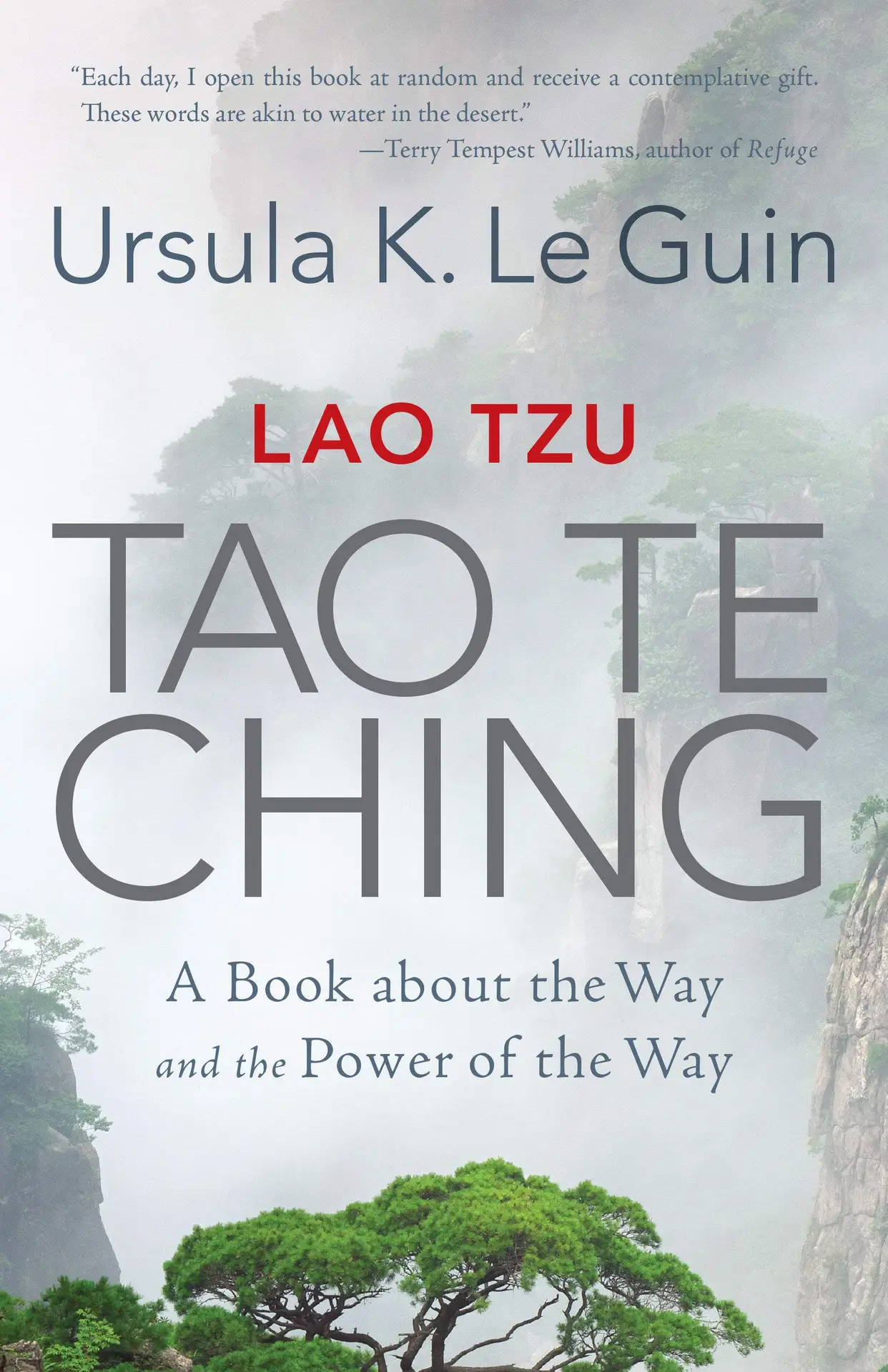
Lao Tzu: Tao Te Ching: A Book about the Way and the Power of the Way – Translated by Ursula K. Le Guin
A rich, poetic, and socially relevant version of the great spiritual-philosophical classic of Taoism, the Tao Te Ching—from a legendary literary icon
Most people know Ursula K. Le Guin for her extraordinary science fiction and fantasy. Fewer know just how pervasive Taoist themes are to so much of her work. And in Lao Tzu: Tao Te Ching, we are treated to Le Guin’s unique take on Taoist philosophy’s founding classic.
Le Guin presents Lao Tzu’s time-honored and astonishingly powerful philosophy like never before. Drawing on a lifetime of contemplation and including extensive personal commentary throughout, she offers an unparalleled window into the text’s awe-inspiring, immediately relatable teachings and their inestimable value for our troubled world.
Jargon-free but still faithful to the poetic beauty of the original work, Le Guin’s unique translation is sure to be welcomed by longtime readers of the Tao Te Ching as well as those discovering the text for the first time.