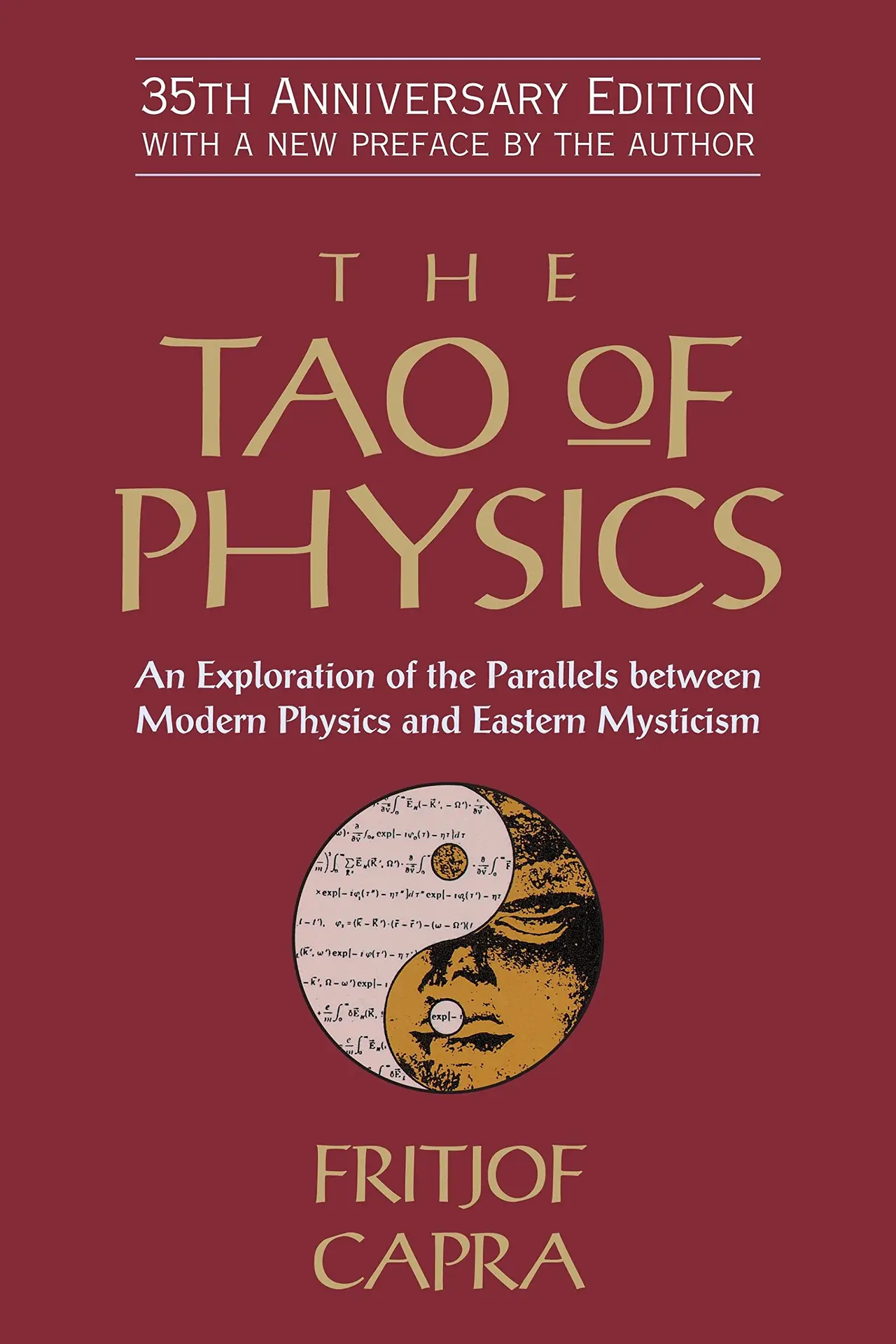

The Tao of Physics: An Exploration of the Parallels between Modern Physics and Eastern Mysticism
I think a lot of people assume that The Tao of Physics is just another New Age book trying to force a connection between science and spirituality. But Fritjof Capra’s 1975 work is something far more interesting: a physicist’s attempt to reconcile the counterintuitive findings of quantum mechanics with the philosophical frameworks of Eastern mysticism. The book became a bestseller, translated into 23 languages, and sparked a conversation that’s still alive today.
The Origins: Psychedelics, Heisenberg, and a New Paradigm
Capra’s journey to writing The Tao of Physics wasn’t conventional. He admitted that his early explorations of these ideas were influenced by psychedelic experiences, which he described as overwhelming and transformative. But the real intellectual validation came from his discussions with Werner Heisenberg, one of the founders of quantum mechanics. Heisenberg revealed to Capra that he, too, had seen the parallels between quantum theory and Eastern thought. During a trip to India in the 1920s, Heisenberg had discussed Indian philosophy with Rabindranath Tagore. Those conversations helped him accept the radical implications of quantum physics. As Heisenberg put it, realizing that a whole culture subscribed to similar ideas made the new physics feel less “crazy.”
Capra didn’t stop at quantum mechanics. In the afterword to the third edition of The Tao of Physics, he proposed six principles for a new scientific paradigm:
- Symmetry between parts and wholes: Recognizing that parts and wholes condition each other.
- Process over structure: Focusing on dynamic processes rather than static structures.
- Epistemic science: Adapting scientific methods to the subject being studied, rather than insisting on rigid objectivity.
- Knowledge as networks: Replacing the idea of knowledge as a building with foundations with the idea of knowledge as interconnected networks.
- Approximations over truth: Abandoning the quest for absolute truth in favor of better approximations.
- Cooperation over domination: Shifting from a mindset of dominating nature to one of cooperation and nonviolence.
Acclaim and Criticism: A Divisive Legacy
The Tao of Physics received widespread acclaim. Victor N. Mansfield, a physicist and astronomer at Colgate University, called it a successful integration of physics and Eastern mysticism. New York magazine described it as a “brilliant best-seller” that lucidly analyzes the parallels between Eastern thought and modern physics.
But the book also faced significant criticism. Jeremy Bernstein, a physicist at the Stevens Institute of Technology, dismissed Capra’s methodology as superficial, arguing that he relied too heavily on accidental similarities in language rather than deep, meaningful connections. Leon Lederman, a Nobel Prize-winning physicist, criticized the book for oversimplifying the rigorous relationship between theory and experiment in physics. Peter Woit, a mathematical physicist at Columbia University, pointed out that Capra’s reliance on the outdated bootstrap model of strong-force interactions (rather than the widely accepted Standard Model) undermined his arguments.
Capra defended his work, noting that the Standard Model still doesn’t account for gravity, leaving room for alternative frameworks like string theory—or even a revival of the bootstrap idea in some form. Despite the criticism, The Tao of Physics remains influential, as evidenced by ongoing discussions in forums like Reddit, where users debate its relevance in today.
Why It Still Matters
The Tao of Physics isn’t just a relic of the 1970s. It’s a reminder that science and spirituality don’t have to be at odds. Capra’s work challenges us to think about reality in a more holistic way—one that embraces interconnectedness, dynamism, and the limits of human understanding. Whether you agree with his methods or not, the book forces me to ask: What if western ignorance of eastern philosophical heritage prevents us from expanding new discoveries in quantum physics and incorporating them into our understanding of the universe and our place in it?
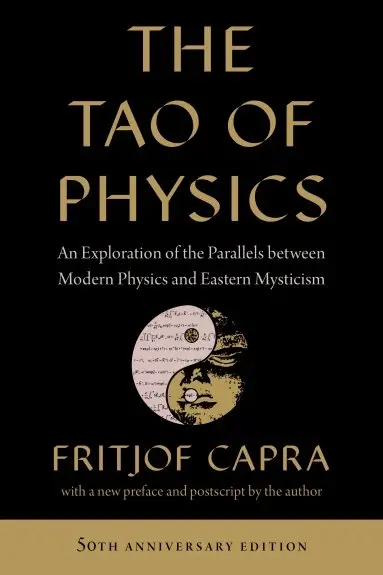
An updated 50th anniversary edition of the best-selling classic on the extraordinary relationship between modern physics and Eastern philosophy.
Fritjof Capra brought the mystical implications of subatomic physics to popular consciousness for the very first time back in 1975. Many books have been written in the ensuing years about the connections between quantum theory and the ideas of Buddhism, Hinduism, and Taoism, but The Tao of Physics serves as the foundation on which the others have been built, and its wisdom has stood the test of time. Its publication in over twenty languages stands as testimony to its universal applicability and enduring significance. This special edition celebrates the fiftieth anniversary of the perennial classic and includes new material by the author—a preface, an updated afterword, and a postscript—reflecting on further discoveries and developments in the years since the book’s initial publication.